Xin Dalu 2×10 TPH Steam-Flaked Corn Line - BellaEx

2×10 TPH steam-flaked corn line for Xin Dalu in Hulunbuir, China. Retrofit delivery from receiving & cleaning to packing & palletizing. Contact us.

Hulunbuir Xin Dalu Technology Development Co., Ltd.

You are reviewing a 2×10 TPH steam-flaked corn line delivered by BellaEx for Hulunbuir Xin Dalu Technology Development Co., Ltd. in Hulunbuir, Inner Mongolia, China. Executed as a retrofit project, the scope covers receiving & cleaning → tempering/soaking → steam conditioning → roller flaking → drying & cooling → packing & palletizing.

Specifications
Photos
Videos

Project Overview

Summary

In 2025–2026, BellaEx retrofitted and integrated a two-line steam-flaked corn processing line for Hulunbuir Xin Dalu Technology Development Co., Ltd. in Hulunbuir, Inner Mongolia, China. The project was executed inside an existing plant building, with the goal of creating a clear upgrade path without rebuilding the entire facility. The priority was to align upstream preparation, steam conditioning, roller flaking, and downstream finishing into a stable, operable line concept that fits site constraints and retrofit interfaces.

This public version summarizes what project owners and engineering teams typically evaluate first: the project boundaries, the delivered scope at a module level, and how installation, commissioning, and trial support were organized. Detailed configurations such as specific model numbers, material thickness, and site-specific utilities are intentionally withheld and can be shared under NDA when required.

BellaEx provides feed processing equipment and line-level solutions for global customers, supported by a manufacturing group with long-term industry experience.

Project highlights

  • Capacity: 2 lines, 10 TPH per line, finished product basis
  • Application: Steam-flaked corn for ruminant feed applications
  • Scope: Receiving & Cleaning → Tempering and Soaking → Steam Conditioning → Flaking → Drying & Cooling → Packing & Palletizing
  • Project type: Retrofit in an existing facility, with site-adapted layout and integration
  • Execution milestones: Manufacturing plan issued Jul 2025 → planned manufacturing completion milestone Sep 2025 → commissioning and trial support completed Jan 2026
  • Public-level value: Two-line configuration for flexible production planning, module-based scope from intake to packing, coordinated start-up support for structured ramp-up

Customer context

Hulunbuir Xin Dalu Technology Development Co., Ltd. is based in Hulunbuir, Inner Mongolia, China. The customer selected a two-line steam-flaked corn configuration and implemented the project as a retrofit, prioritizing practical site integration, clear scope boundaries, and coordinated system start-up. The project goal was to retrofit and integrate a complete steam-flaking process chain with commissioning support and clear interface definition.

Challenges

Challenges

  1. Retrofit integration under site constraints Working within existing civil, routing, and maintenance-access limitations required careful interface definition and layout coordination.
  2. Utilities and steam interface alignment Steam conditioning performance depends on steam source, control strategy, and site utility stability. The integration needed a clear boundary between customer utilities and line process requirements.
  3. Process consistency across multiple modules Receiving & cleaning, tempering/soaking, conditioning, flaking, and drying/cooling must be tuned as a chain. Misalignment at any upstream step can create downstream instability.
  4. Commissioning sequence and ramp-up planning A phased commissioning plan was needed to reduce integration risk and support practical ramp-up and operator readiness.
  5. Multi-party coordination Retrofit projects often involve multiple contractors and internal teams. Clear scope, interface checklists, and change control reduce schedule and rework risk.

Bellaex Approach

1. Retrofit Integration: Interfaces First

We structured the retrofit around interfaces and operability:

  • Mechanical interfaces: infeed/outfeed connections, access for inspection and maintenance, routing constraints
  • Process interfaces: moisture/tempering logic, steam conditioning targets (defined as a commissioning objective, not a guaranteed KPI)
  • Utilities interfaces: steam, power, and compressed air requirements documented as project-specific inputs
  • Safety and operability: guarding, access doors, and maintenance workflow considered during layout and module selection

2. Commissioning Method: Phased and Verifiable

Commissioning was organized as a staged sequence:

  • Module-level checks and dry runs
  • Interlock and control logic verification (scope dependent)
  • Hot commissioning for conditioning and flaking sections
  • Trial runs with stepwise parameter tuning
  • Operator training and handover checklist alignment

3. Scope & Responsibilities: Clear Boundaries

Bellaex scope (typical, per project):

  • Module-based process line concept and interface definition
  • Equipment/module supply for the defined process chain
  • Integration and commissioning support (on-site or remote, per agreed plan)
  • Training and documentation package

Customer / local partner scope (typical, per project):

  • Site utility readiness (steam, power, air)
  • Civil and installation execution (unless contracted otherwise)
  • Local compliance and permitting
  • Production staffing for trial runs and acceptance tests

Delivered Scope

Delivered Scope


ModulePurpose (Public Summary)Integration Notes
Receiving & CleaningRemove foreign material and stabilize feed to the process chainInterfaces with upstream intake and dust control system are site-dependent
Tempering / SoakingPrepare corn for stable conditioning and flakingParameters depend on raw corn specs and target product definition
Steam ConditioningEnable controlled thermal and moisture conditioning before flakingSteam source and control scope are project-dependent
Roller FlakingProduce target flake form for downstream finishingTarget flake specs are confirmed per project
Drying & CoolingPrepare finished flakes for stable storage and packingUtility configuration depends on site energy sources
Packing & PalletizingFinal packing format and handlingPacking format affects layout, interfaces, and utilities


Process walkthrough

Receiving & Cleaning

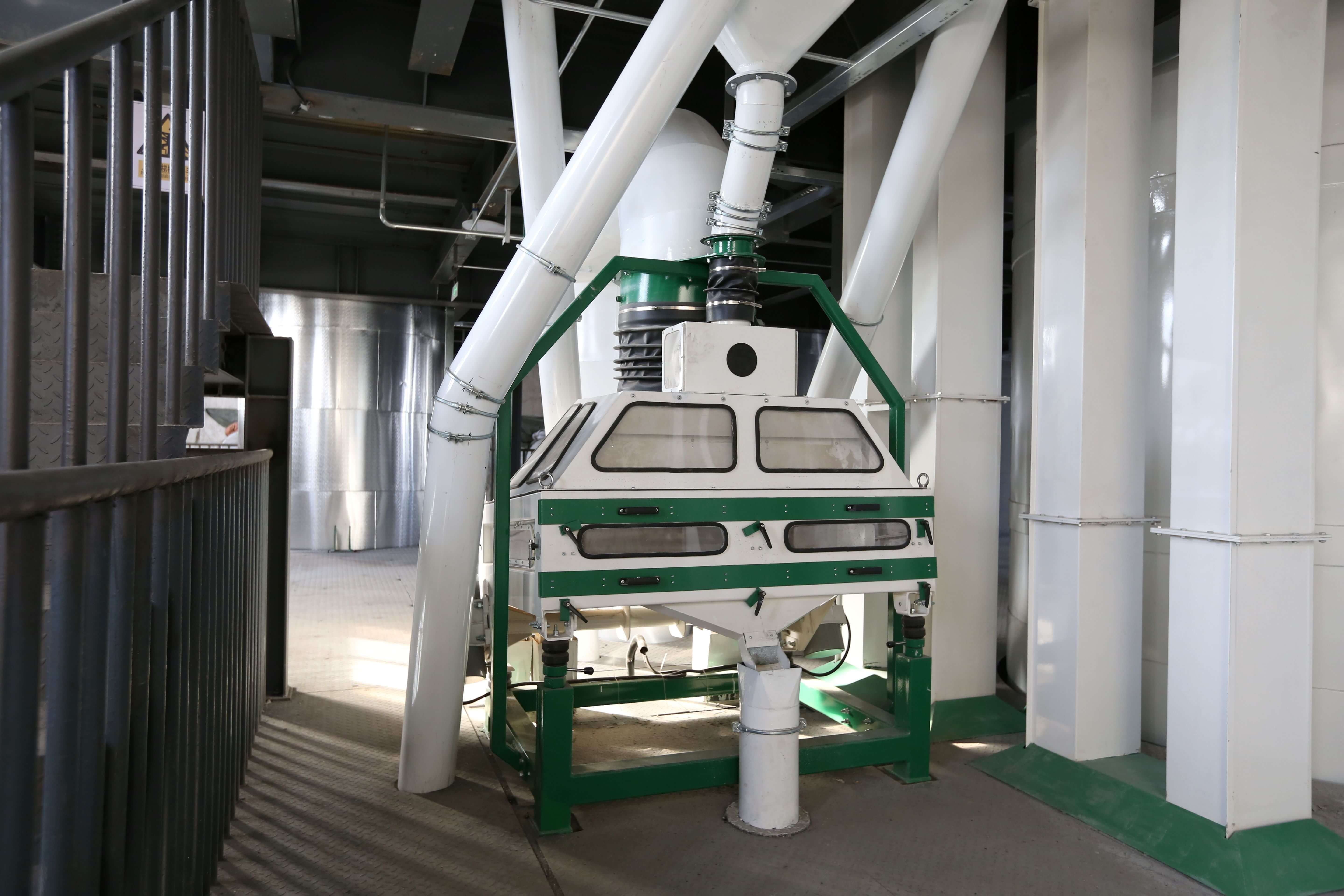
This section routes incoming corn through a front-end cleaning train to reduce light impurities and protect downstream equipment. Typical functions include magnetic removal, dust collection, and controlled discharge to the next stage. Integration with site intake layout and dust control is confirmed during engineering.

Tempering / Soaking

Cleaned corn is transferred into tempering or soaking capacity where moisture is added and equalized through controlled residence time. This section is designed to support stable conditioning and flaking by reducing variability entering the conditioner. Interfaces for dosing, monitoring, and material routing are configured per project.

Steam Conditioning

Tempered corn enters steam conditioning where steam is applied prior to flaking. The design intent is to achieve stable pre-flaking conditioning based on project targets and available utilities. Steam source conditions and the automation boundary are defined per project to support commissioning and ramp-up.

Roller Flaking

Conditioned material is flattened through roller flaking to meet the target flake definition required by downstream finishing. Typical design considerations include protection of product-contact areas, stable feeding, and controllable roll-gap adjustment. Control intent focuses on coordinated conditioning and roll-gap management to support stable operation.

Drying & Cooling

Fresh flakes are dried and cooled to reach a stable condition for conveying and packing. The configuration is designed around maintainability, cleaning access, and reliable discharge into finished product handling. Final utility selection and layout interfaces are site-dependent.

Packing & Palletizing

Finished flakes are routed to packing and palletizing to match the required logistics and shipment preparation. Packing format and palletizing interface are project-specific and aligned with site layout, labor plan, and utilities.

FAQ

FAQ

  • What information do you need to propose a retrofit steam-flaked corn line?

Site layout (2D/3D if available), raw corn specs, target flake specs, packing format, and a utilities overview (steam/power/air). If any item is unknown, we can start with assumptions and confirm during engineering.

  • How do you reduce retrofit integration risk?

By defining interfaces early (mechanical, process, utilities), validating layout and maintenance access, and using a phased commissioning plan with module-level checks before full-line trial runs.

  • What are the key control points for a 10 TPH-class steam flaking line?

Upstream preparation consistency, conditioning stability (steam interface and control scope), flaking target specs, and downstream drying/cooling readiness. Final tuning depends on raw material and site conditions.

  • Do utilities and steam sources affect the final line design?

Yes. Steam source stability and available utilities influence conditioning design, control scope, and commissioning plan. We typically confirm these inputs early to avoid rework.

  • Can you share detailed equipment models and site-level data?

Yes, under NDA. The public case page stays at module level to keep disclosure consistent and compliant.

WAREHOUSE

Feed & Food—Flaking | Grinding | Rolling | Feed Mills Modern workshops, clean assembly halls, and a welcoming office building—built to deliver reliable equipment and on-time projects.

CONTACT US

Connect with BellaEx for flaking and steam-flaking solutions across feed and food industries. Get quotes, technical support, and project consultation from our global team.

ray@bellaex.com
+86-13810151555